Wine Road 290: the 30 miles that hold about 50 Texas wineries
Roughly 50 wineries sit along one 30-mile run of US 290. Here is how the corridor is laid out, and why the same three of them keep appearing on tour route sheets.
 By Robert Schneider, Fredericksburg wine tour specialist & Hill Country experience guide
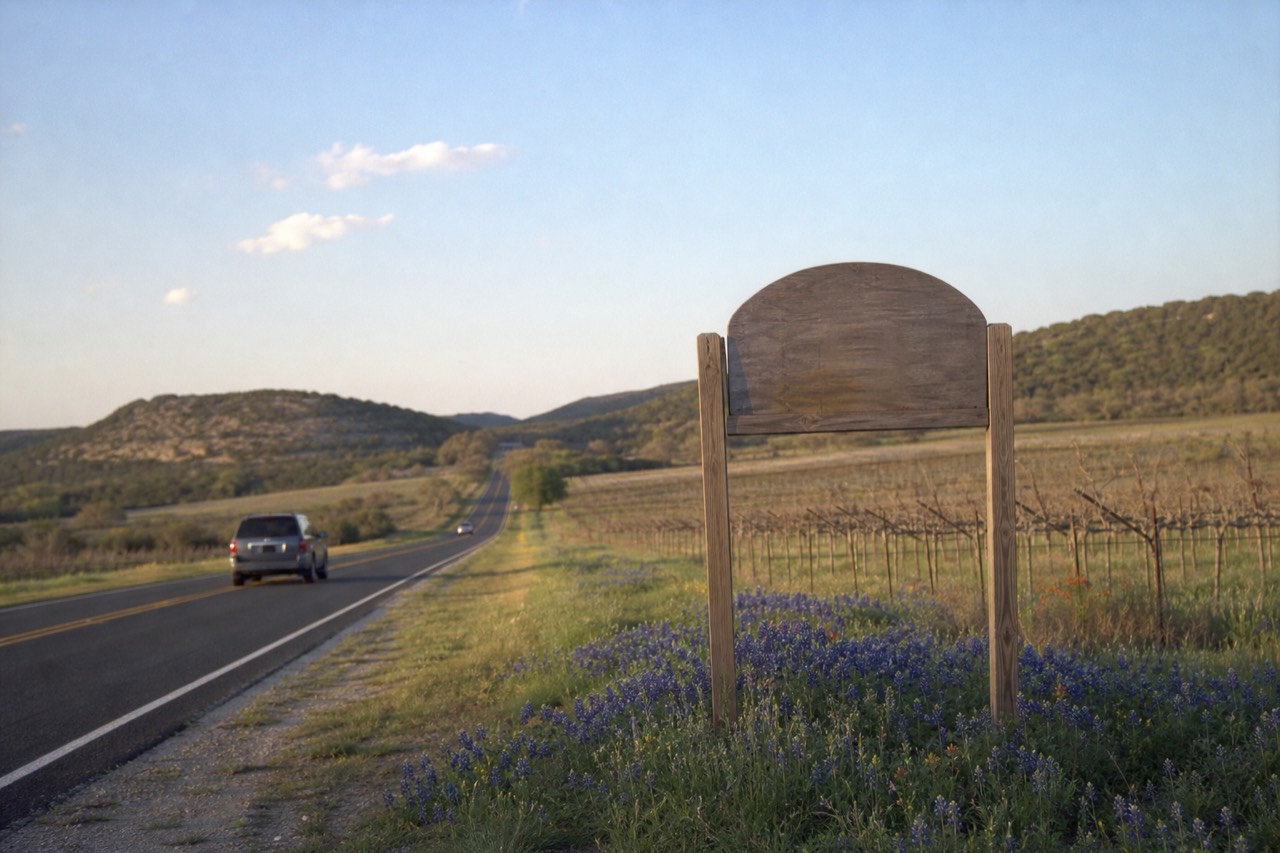
Short answer
About 50 wineries and vineyards line the roughly 30-mile stretch of US Highway 290 between Fredericksburg and Johnson City, the densest wine corridor in Texas. It sits inside the Texas Hill Country AVA, which covers 9.6 million acres and holds over 100 wineries in total. Most tours run three stops along it in four to six hours.
Drive east out of Fredericksburg on US 290 and the tasting-room signs start before the town does. Wildseed Farms is about six or seven miles out. By mile ten you have passed several turnoffs, and by the time the road reaches Johnson City, roughly 30 miles later, you have gone by something close to 50 wineries and vineyards. That density is the whole story of this corridor. There is nowhere else in Texas where you can be standing at a tasting bar four minutes after leaving the last one.
The corridor also produces the single worst Saturday in Texas wine, and the two facts are related. What follows is the layout, the counts that are actually verifiable, how a busy day genuinely runs, and why the operators' vans keep getting seated while walk-in couples wait on a bench outside.
How many wineries are on Highway 290 in Texas?
About 50 wineries and vineyards line the roughly 30-mile stretch of US 290 between Fredericksburg and Johnson City. That figure comes from Texas Monthly's reporting on the corridor and describes the highway itself, not the county. Gillespie County as a whole holds nearly 100, and the Texas Hill Country AVA holds over 100.
The counts confuse people because four different numbers all get quoted as "how many wineries are in Fredericksburg", and each one is measuring a different thing. Sorting them out takes a table, because the difference between 50 and 100 is not a disagreement. It is a boundary question.
| Count | What it measures | Source of the figure |
|---|---|---|
| About 50 | Wineries and vineyards on the roughly 30-mile US 290 stretch, Fredericksburg to Johnson City | Texas Monthly reporting on the corridor |
| Nearly 100 | Wineries, vineyards and tasting rooms in Fredericksburg and Gillespie County | Visit Fredericksburg, the official visitor body |
| Over 100 | Wineries across the whole Texas Hill Country AVA | Texas Hill Country Wineries |
| Over 60 | Paying members of the Texas Hill Country Wineries association, reported at 69 in May 2025 | The association, and Texas wine trade press |
The gap between the highway count and the county count is the useful part. Roughly half of Gillespie County's tasting rooms are not on 290 at all: they sit north toward Bell Mountain, south toward the Sisterdale road, or in town on and around Main Street. So a visitor who drives the corridor end to end has seen the busiest half of the county's wine and none of the quiet half. That is a reasonable trade for a first visit and a poor one for a third.
The membership number is the one to treat carefully. Over 60 is the association's own current phrasing, and a trade report put it at 69 as of May 2025 with further additions since. Membership is voluntary and costs money, so it undercounts the total by design. It is a good proxy for "wineries organized enough to run a passport program" and a bad proxy for "wineries that exist". We work through all four figures in more detail on the page answering how many wineries Fredericksburg actually has.
Where does the 290 wine road start and end?
The commonly described corridor runs east from Fredericksburg along US 290 to Johnson City, about 30 miles. Wildseed Farms sits roughly six to seven miles out on that road. Luckenbach is about 10.4 miles from town on a southern turnoff, and Enchanted Rock is about 18 miles north, so both are day-trip neighbors rather than corridor stops.
There is no official signage declaring a start and finish, which is why the phrase "Wine Road 290" behaves more like a shorthand than an address. The practical anchors are the two towns. Fredericksburg at the western end has the lodging, the restaurants and almost all the tour departures. Johnson City at the eastern end is the turning point for most itineraries and the exit toward Austin.
| Landmark | Distance from Fredericksburg | On the corridor? |
|---|---|---|
| Wildseed Farms | About 6 to 7 miles east | Yes, on US 290 |
| Luckenbach | About 10.4 miles | Just off it, southern turnoff |
| Enchanted Rock State Natural Area | About 18 miles north | No, separate northern road |
| Johnson City | About 30 miles east | Yes, corridor's eastern end |
| Austin | About 70 miles | Beyond the corridor |
| San Antonio | About 70 miles | Different approach entirely |
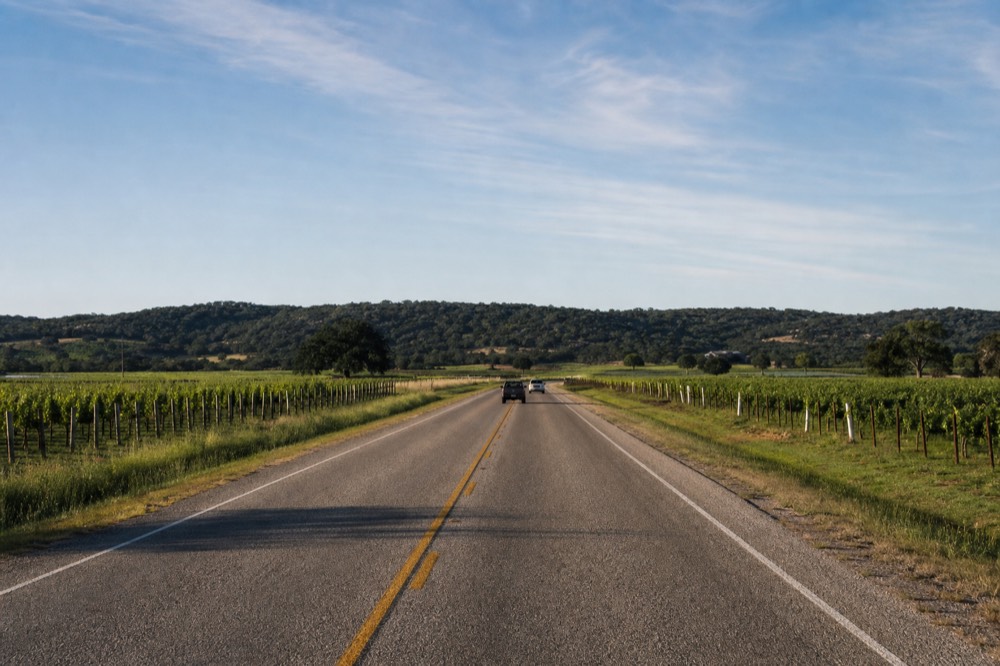
Distances that short are exactly why the corridor works and exactly why it is dangerous. Four minutes between wineries means no meaningful gap for a driver's blood alcohol to fall, and it removes the natural pacing that a longer drive would impose. In Bordeaux or Napa the geography slows you down. Here it does not, and the result is people arriving at their third tasting having drunk more, faster, than they intended.
Two neighbors deserve a mention because visitors assume they are on the route and then lose an afternoon. Enchanted Rock requires a day-pass reservation on weekends, school breaks and holidays, bookable up to 30 days out, and it sells out on peak days at $8 per person aged 13 and over. Luckenbach is free and takes about twenty minutes to see, or four hours if a band shows up. Neither combines neatly with a full corridor day, and pretending otherwise is how people end up doing both badly.
Which wineries sit on the 290 corridor?
The rooms that appear by name on bookable 290 itineraries are Texas Wine Collective, Barons Creek Vineyards, Blumenthal Farms, Wedding Oak, Charleston Taylor, and Arch Ray or Ogle as an alternate. Grape Creek, Becker and Pedernales Cellars are among the other well-known corridor names, though no current tour lists them as a named stop.
That distinction between "on the corridor" and "on a tour route sheet" is worth holding onto. About 50 properties line this road. Nine bookable tours publish their stops, and between them they name only about eight rooms. The operators are not sampling the corridor evenly; they are running a small, tested set.
| Winery | Appears on this many named itineraries | Published tasting fee |
|---|---|---|
| Texas Wine Collective | 7 | Not published |
| Barons Creek Vineyards | 4 | $30 per person, Fredericksburg location |
| Blumenthal Farms | 4 | Not published |
| Wedding Oak Winery | 1 | Not published |
| Charleston Taylor Vineyards | 1 | Not published |
| Arch Ray or Ogle | 1, as the alternate second stop | Not published |
| Grape Creek Vineyards | 0 as a named stop | $30 classic, $45 taste and tour |
| Becker Vineyards, founded 1992 | 0 as a named stop | Not published |
| Pedernales Cellars | 0 as a named stop, listed dog-friendly | Not published |
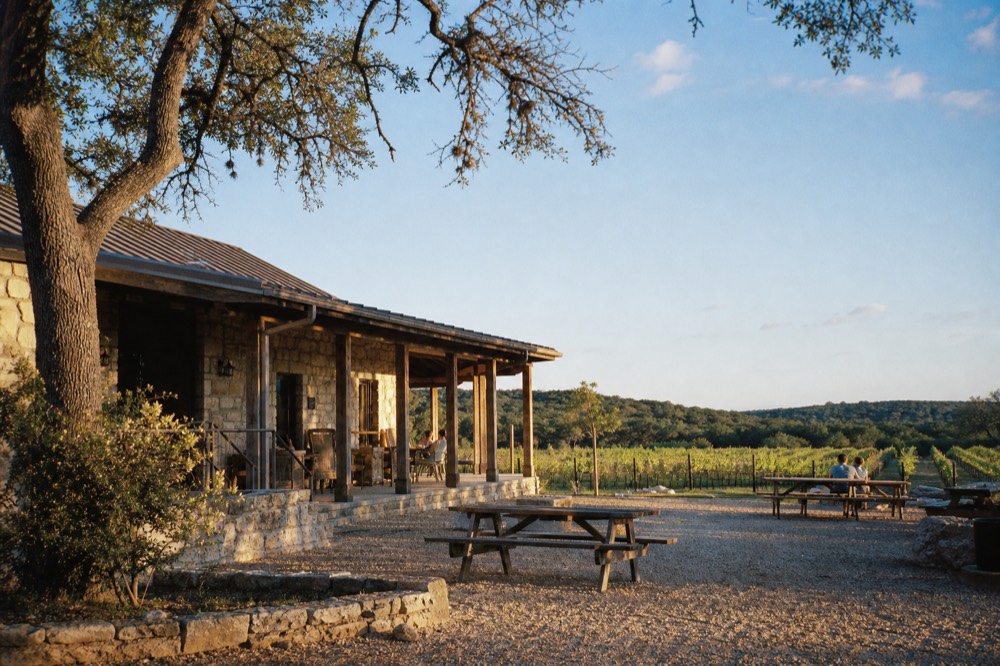
Reasons for the narrow set are mundane. A tour needs a lot behind the building that a 24-foot vehicle can turn around in, a bar that can take a party of eleven without a reservation collapsing, and a manager who will answer the phone at 12:40 to say the group is running late. Plenty of excellent small rooms fail one of those tests and will never appear on a route sheet. Which of the corridor's rooms are genuinely worth a stop, by category, is worked through in our guide to the tasting rooms worth your fee.
What does a Saturday on 290 actually look like?
Busy, and in a specific pattern. The corridor fills from about 12:30 as brunch ends and stays full until roughly 5pm. Walk-in couples wait longest at the largest rooms. Booked groups get seated on schedule because the operator called ahead. October, when the month-long wine passport runs, is the heaviest month of the year.
I have run tasting days out here for a decade and the shape of a Saturday almost never varies. The first hour after opening is the best window in the entire week: rooms are calm, staff have time to talk, and you get the pour explained rather than poured. By half past twelve that has gone. By two the larger properties are running a queue for the bar and a separate wait for a table, and a couple who arrived hoping to sit outside is looking at 40 minutes.
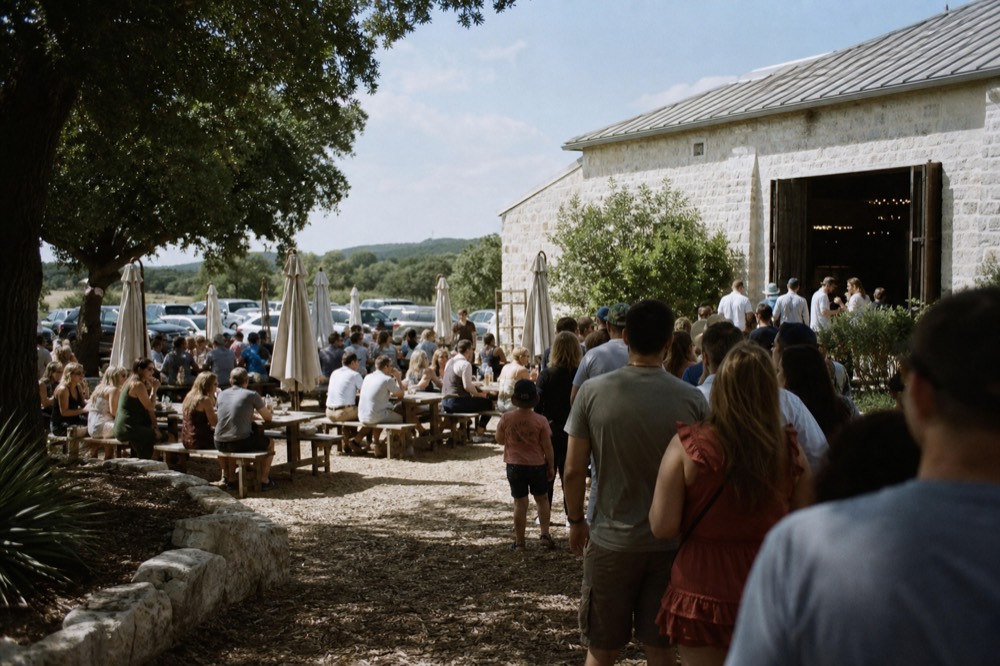
Three things make the crush worse than the raw visitor numbers suggest. The rooms cluster, so everybody moves in the same direction at the same time. The distances are tiny, so a group that decides to bail on a queue is at the next winery in five minutes, transferring the queue rather than dissolving it. And the corridor has a genuine seasonal peak in October, when the Texas Wine Month Passport runs from the 1st to the 31st with 50 or more participating wineries and the Food and Wine Fest lands downtown on October 22 to 25, 2026.
The counter-move most locals use is simple and slightly unglamorous. Start at ten or eleven, not at one. Run the corridor east to west, finishing near town rather than 30 miles from your hotel. Accept that three wineries is the honest limit and that the fourth is where the day usually goes wrong.
How do tours beat the queue on 290?
By calling ahead. Operators hold arrival slots and tables at their regular rooms, which is why a booked group walks past a waiting line. It is not preferential treatment so much as a standing commercial relationship: the winery knows fourteen guaranteed tasting fees are arriving at 1:15, and it plans staffing around that.
This is the least discussed and most valuable thing a tour buys you on this corridor, and it is invisible from the outside. What you see is a van pulling up and a group being led to a reserved table. What actually happened is a phone call that morning and, in most cases, months of repeat business behind it.
| Friction on a Saturday | Walk-in couple | Booked tour group |
|---|---|---|
| Getting a table at a busy room | Wait, often 20 to 40 minutes at peak | Held in advance by the operator |
| Parking at a full property | Circle the gravel lot | Vehicle drops at the door |
| Finding the next stop | Phone maps, guesswork on hours | Fixed route the guide runs weekly |
| Paying tasting fees | Card out at every bar | Pre-paid on the all-inclusive tours |
| Timing lunch | Whatever has a table | Built into the itinerary |
| Getting home after four flights | Somebody stays sober | Included in the ticket |
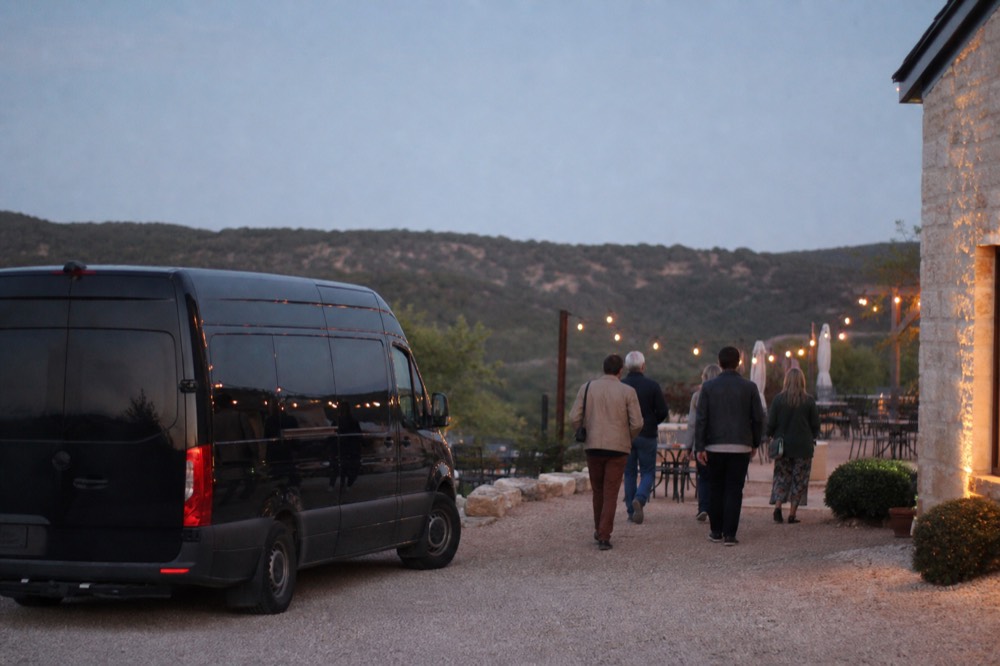
There is a second advantage that shows up on the private vehicles specifically. A private Sprinter can change its own mind. If Blumenthal Farms is unexpectedly hosting a wedding party, the driver reroutes to the alternate stop without anybody losing an hour, because the operator already knows which rooms have capacity that afternoon. The four-hour 290TX private day runs $475 per group of up to eleven, and you can see the current availability and route details before deciding whether the flexibility is worth it to your group. The same operator's second listing, a private Sprinter day under a different name, covers the same ground if the first has no slot on your date.
Is it legal to drink in the car on the 290 wine road?
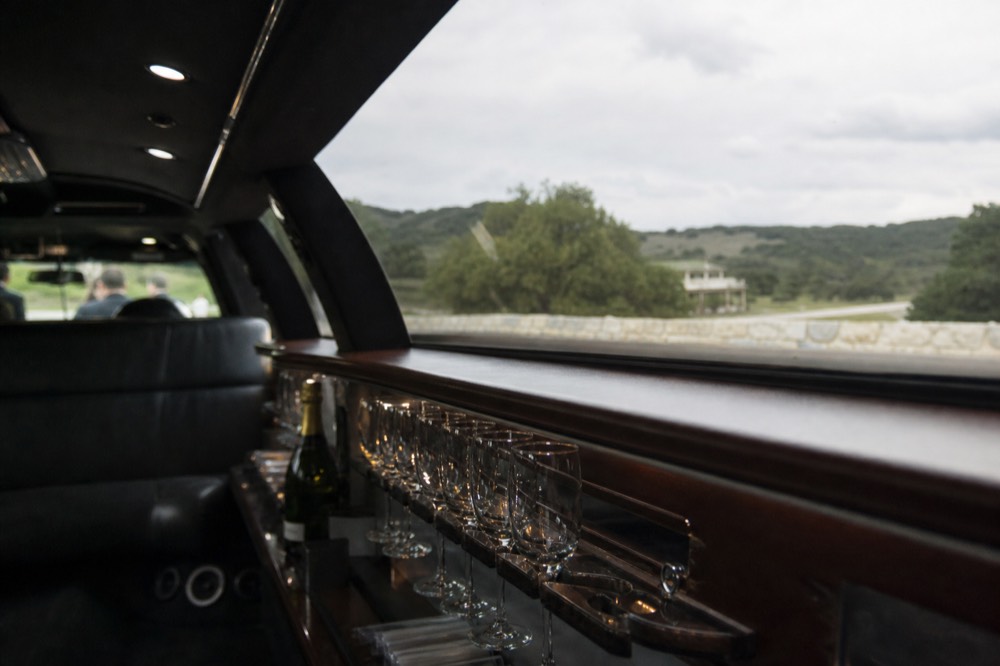
Only in a commercial vehicle. Texas Penal Code section 49.031(b) bans open containers in a vehicle's passenger area on a public highway, but section 49.031(c)(1) excepts passengers of a motor vehicle used primarily to transport people for compensation, including a bus, taxicab or limousine. A friend's car does not qualify. Drivers are held to 0.08 under 49.04 and 49.01.
That exception is the legal spine of every shuttle, limo and Sprinter running this corridor, and it is the reason a group can keep a bottle open between stops on a tour and cannot in a private SUV. The statute is public and short enough to read in a minute: the Texas open container and intoxication offences sit together in chapter 49.
A few adjacent facts, because they come up constantly and the internet gets them wrong. The drinking age is 21 statewide, no exceptions on a wine tour. Wineries pour under permits issued through the Alcoholic Beverage Code chapter 16, which is why a tasting bar can charge for samplings on the premises at all. Minors in tasting rooms is a per-winery policy rather than a state rule, so call the room rather than assuming. And on the question of walking down Main Street with a glass in hand, the honest position is that Texas has no statewide public-drinking ban and no Fredericksburg ordinance on the subject surfaced on official sources, while venues and events set and enforce their own rules. Anyone telling you flatly that it is legal, or flatly that it is banned, is going beyond what the record supports.
What does 290 cost by car versus on a tour?
Driving yourself costs about $90 per person in tasting fees at three rooms, plus fuel, plus one person who does not drink. A per-seat tour runs $99 to $325 depending on whether tastings and lunch are included. A private Sprinter at $475 per group works out to $43 a head across eleven people.
The arithmetic is what changes minds, because the sticker prices are misleading in both directions. A $99 limousine seat is not cheap once you add three tasting fees at the bar. A $475 private vehicle is not expensive once you divide it. Here is the corridor's full price ladder with what each ticket actually contains.
| Option | Price | Tastings | Lunch | Cancellation |
|---|---|---|---|---|
| Brooke's stretched Lincoln or Volkswagen, 5h | $99 pp | Paid at each bar | No | Non-refundable |
| Cable Car social day, 5h | $149 pp | Included | Included | Free to 24h |
| Cowboy Tours bus, 3 wineries | $199 pp | Included, 4 to 5 pours each | No, snacks and water only | Free to 24h |
| Fredericksburg Tours three wineries, 5.5h | $229 pp | Included | Included | Free to 24h |
| 290TX luxury winery and brewery, 3 stops | $229 pp | Fees included | No | Free to 24h |
| Fredericksburg Tours boutique day, 5.5h, max 10 | $239 pp | Included | Included | Free to 24h |
| 19th Hole, 3 wineries, max 14 | $325 pp | Included | Included, plus snacks | Free to 24h |
| 290TX private Sprinter, 4h, up to 11 | $475 per group | Not included | Optional extra | Free to 24h |
| Wine Tour Pros private custom, 6h, up to 11 | $850 per group | Not included | Not stated | Non-refundable |
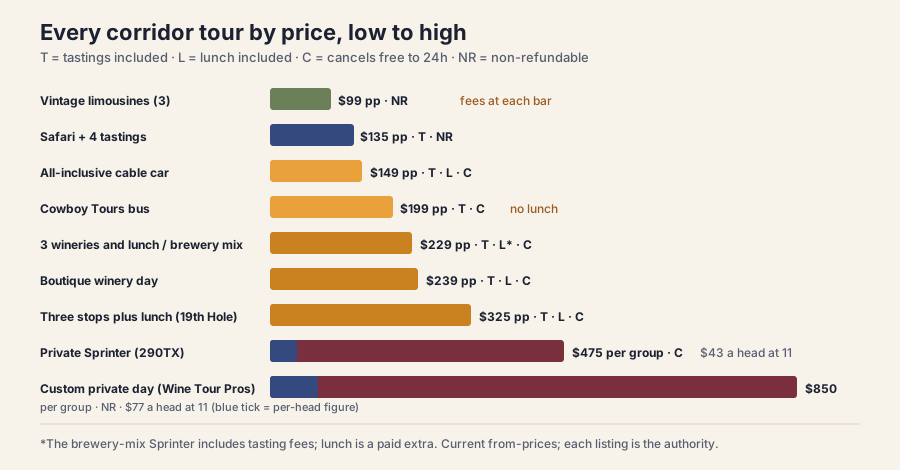
Two patterns fall out of that ladder. Every tour that includes tastings and lunch lands between $149 and $325, and the spread inside that band mostly buys smaller groups rather than better wine. And the two cheapest seats on the corridor are the ones that do not include tasting fees, which means the real cost of a $99 limousine day is closer to $180 once three bars have taken their $30. The cowboy bus is the one that surprises people: $199 with four to five pours at each of three wineries and no lunch, which is either excellent value or a long afternoon without food, depending on how you plan. If a lunch stop matters more to you than pour count, the all-inclusive social day with lunch and every fee covered is the straighter comparison. The whole cost picture, including tips and bottle purchases, is on our wine tour cost breakdown.
How many wineries can you actually fit in a day on 290?
Three, comfortably. Every bookable corridor tour that publishes a stop count runs three wineries, without exception, across durations from four to eight and a half hours. That consistency across nine independent operators is the clearest signal available that three is the working limit, not a marketing choice.
I have watched people try four and I have watched what happens. Flights run four to six pours each, so three wineries is already twelve to eighteen tastes. The fourth stop is where the notes stop landing, the photographs get worse and somebody starts buying cases they will regret. Operators who could sell a bigger day, and who charge $325 or $850 for their premium options, still stop at three. That is worth taking seriously.
| Duration | Stops | What the extra hours actually buy |
|---|---|---|
| 4 hours, private Sprinter | 3 | Speed, and a route you control |
| 5 hours, limo or cable car | 3 | Lunch on the all-inclusive versions |
| 5.5 hours, small-group | 3 | Smaller caps, 10 to 14 people |
| 6 to 7 hours, from San Antonio | 2 wineries plus Main Street free time | Roughly 3 hours of driving each way |
| 8.5 hours, aficionado day | 3 plus town time | One extra winery over the shorter San Antonio trips |
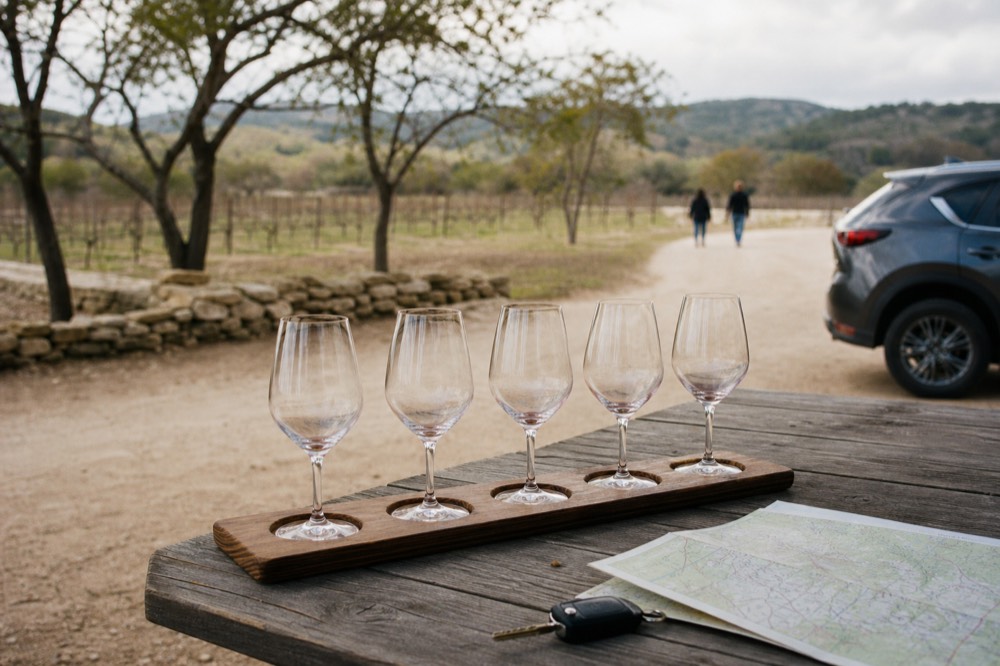
The San Antonio trips are the exception that proves the rule, and they prove it by arithmetic. Fredericksburg is about 70 miles from San Antonio, roughly 90 minutes each way, so a six-hour day trip has about three hours left after driving and spends it on two wineries plus town time. Push to eight and a half hours and you get the third winery back. Those departures sit on the day trips up from San Antonio hub.
Worth saying plainly for anyone comparing from the other direction: the half-day shuttles leaving Austin do not touch this corridor. They pour in Driftwood and Wimberley, in the southern Hill Country, about an hour from 290 in the wrong direction. They are perfectly good days out and they are not this road, which the Austin departures page states rather than blurring under the phrase "Hill Country".
When is the corridor busiest through the year?
October, decisively. The month-long wine passport and the Food and Wine Fest both land in it. Late March to mid-April brings bluebonnet traffic on top of wine traffic. January and February are the quietest months, with average lows around 37F and rooms calm enough to walk into.
Corridor traffic is not evenly spread and planning around the calendar is the cheapest improvement you can make to a tasting day. Below is the working year as the tasting rooms experience it.
| Window | What is running | Corridor conditions |
|---|---|---|
| January to February | Nothing major, average low around 37F | Quietest, walk-ins realistic |
| Late March to mid-April | Bluebonnet peak, Willow City Loop | Wildflower traffic layered onto wine traffic |
| Mid-May to mid-August | Peach season, peak mid-June to late July | Highs in the low 90s, roadside stands open |
| June 1 to August 31 | Summer Season Pass at member wineries | Steady, hot, indoor rooms preferred |
| July to August | Grape stomping and harvest events | Some properties running events rather than tastings |
| October 1 to 31 | Texas Wine Month Passport, 50+ wineries | Peak of the year, book everything ahead |
| October 22 to 25, 2026 | Fredericksburg Food and Wine Fest downtown | Lodging and tours sell out well in advance |
| Late November to early January | Eisbahn rink and the 26-foot Christmas pyramid at Marktplatz | Town busy, corridor moderate |
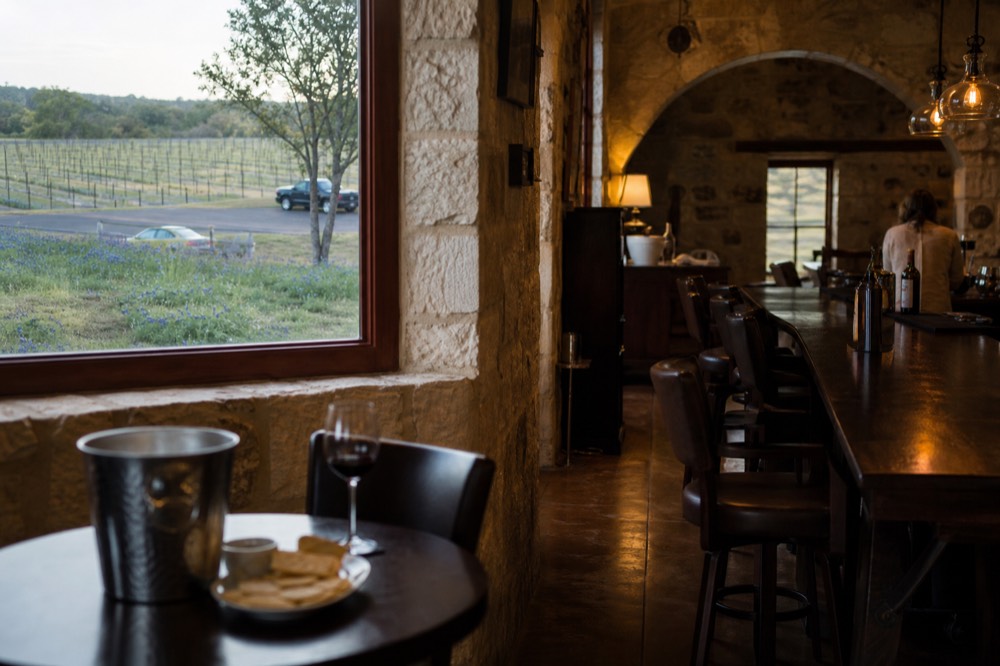
The passport programs run by the Texas Hill Country Wineries association are the one calendar item that changes the maths outright, since a single pass covers tastings across dozens of member properties. It only pays off if somebody is willing to drive, which puts you back at the open-container table above. If you want the corridor without the crush, the honest answer is a Tuesday in February, and the second-honest answer is 10am on any Saturday you can drag your group out of bed for.
Frequently asked questions
How many wineries are on 290 between Fredericksburg and Johnson City?
About 50 wineries and vineyards line the roughly 30-mile stretch. That is the corridor figure specifically. Gillespie County as a whole holds nearly 100 wineries, vineyards and tasting rooms, and the wider Texas Hill Country AVA holds over 100, of which more than 60 are association members.
Can you drink in the vehicle between wineries on 290?
In a licensed commercial vehicle, yes. Texas Penal Code section 49.031(c)(1) excepts passengers of a bus, taxicab or limousine operated for compensation from the open container rule. In a private car it is not permitted, and the driver is held to 0.08 under sections 49.04 and 49.01. The drinking age is 21.
How many wineries can you visit in one day on the corridor?
Three is the working limit. Every bookable corridor tour that publishes a stop count runs exactly three wineries, across durations from four to eight and a half hours. With four to six pours per flight, three rooms already means twelve to eighteen tastes. Operators who could sell more do not.
Is it cheaper to drive the wine road yourself?
On paper, slightly. Three tasting fees at around $30 each comes to about $90 per person plus fuel, and somebody stays sober all day. A $149 all-inclusive seat covers those fees plus lunch and the driving. A $475 private Sprinter splits to $43 a head across eleven, cheaper per person than driving once fees are counted.
What is the busiest time on Wine Road 290?
October, when the month-long Texas Wine Month Passport runs across 50 or more wineries and the Food and Wine Fest lands downtown on October 22 to 25, 2026. Saturdays fill from about 12:30 to 5pm year round. January and February are the calmest months, with average lows near 37F.
Do the Austin wine shuttles go to the 290 corridor?
No. The half-day shuttles from Austin pour in Driftwood and Wimberley, in the southern Hill Country, not on the Fredericksburg stretch of 290. They are a good day out in their own right, but they do not reach this corridor. Tours from San Antonio do reach Fredericksburg, at about 70 miles and 90 minutes each way.