What to do in Fredericksburg that is not a winery
A war museum, a granite dome, a wildflower farm, free Luckenbach and peach stands, with real 2026 prices, for everyone in the group who is not drinking.
 By Robert Schneider, Fredericksburg wine tour specialist & Hill Country experience guide
A town of 11,893 people built a museum that needs three hours minimum, and then put nearly 100 wineries around it. That is the actual problem with Fredericksburg for anyone who does not drink: not that there is nothing to do, but that the wine is so loud in the marketing that everything else gets buried.
There is plenty here. Some of it costs nothing at all.
What is there to do in Fredericksburg that is not a winery?
The National Museum of the Pacific War, the Main Street historic district and its 700 historically significant structures, Enchanted Rock State Natural Area about 18 miles out, Wildseed Farms 7 miles east, free Luckenbach, monthly Fredericksburg Trade Days, and peach orchards and stands from mid-May through mid-August.
Rank them by how much of a day they take, not by how famous they are. The museum is the only one that can consume an entire afternoon on its own, and Enchanted Rock runs three to five hours door to door once you count the drive and the climb. Everything else slots into gaps.
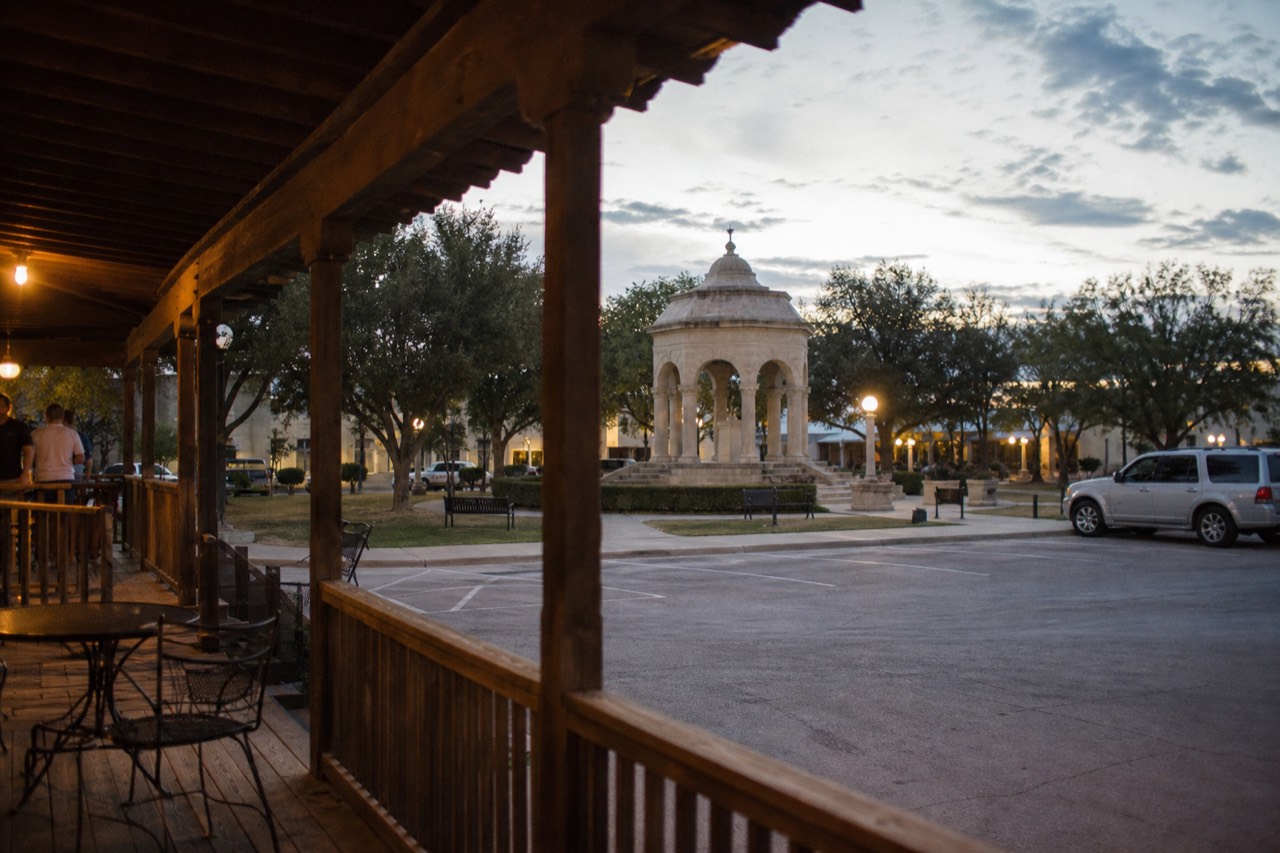
The town's German origins are the reason the non-wine layer exists at all. Fredericksburg was founded on May 8, 1846 by immigrants working under the Adelsverein and named Friedrichsburg after Prince Frederick of Prussia. What survives is not a theme: the historic district counts 700 significant structures still in commercial use, with the Vereins Kirche replica at the center of Marktplatz.
That is also why the food holds up. Der Lindenbaum runs traditional German plates out of a historic limestone building, The Auslander does Bavarian cuisine, Otto's German Bistro takes a farm-to-table angle with gravlax and rösti, and Altstadt Brewery, which took the 2026 Texas Craft Brewers Cup Brewery of the Year, has a biergarten. A beer drinker who is done with wine has somewhere obvious to go.
| Non-wine attraction | 2026 cost | Time needed |
|---|---|---|
| National Museum of the Pacific War | $26 adult, $12 student, free under 10 | 3 to 5 hours |
| Memorial Courtyard and Japanese Garden of Peace | Free, daily until 5 p.m. | 30 to 45 minutes |
| Main Street and Marktplatz | Free to walk | 2 to 4 hours |
| Enchanted Rock | $8 per person aged 13+ | 3 to 5 hours |
| Wildseed Farms | Free | 45 to 90 minutes |
| Luckenbach | Free admission | 1 to 2 hours |
| Fredericksburg Trade Days | $5 parking | 2 to 3 hours |
Where do you go if you do not drink at all?
Start with the museum, because it is the one attraction here that stands on its own regardless of anyone else's plans. It is in Fredericksburg because this is Fleet Admiral Chester W. Nimitz's hometown. Adult admission is $26 in 2026, it opens 9 a.m. to 5 p.m. Wednesday through Monday, and it is closed Tuesdays.
Do not skim it. Three hours is the floor, five is common, and the depth of the Pacific-theatre coverage is why people who expected a small-town display stay most of a day. Prices and hours sit on the museum's own visit page.
If the ticket is not in the budget, the Memorial Courtyard and the Japanese Garden of Peace carry no admission and stay open daily until 5 p.m. They also make a useful meeting point for a group that split up, which happens constantly on a tour day.
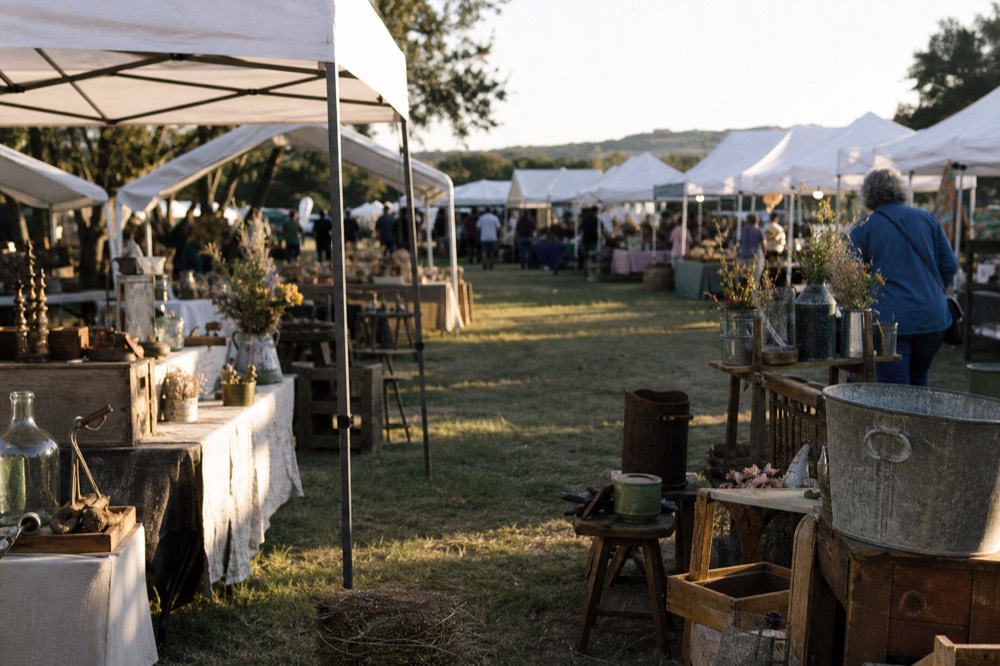
Main Street is the other free option, and it is better than "free" suggests. Shops, galleries, bakeries and the Marktplatz green fill an afternoon without a ticket. Third-Saturday weekends add Trade Days at 355 Sunday Farms Lane, Friday through Sunday, 9 a.m. to 5 p.m. Friday and Saturday and 9 a.m. to 4 p.m. Sunday, with $5 parking and one extra show after Thanksgiving. The 2026 September dates fall on the 18th to the 20th, October on the 16th to the 18th.
Can a non-drinker still enjoy a wine tour day?
Yes, if you choose the format deliberately. A tour built only around three tasting rooms gives a non-drinker four hours of standing around. A tour that pairs the wineries with something else, a game farm drive, a brewery, a distillery, or a long lunch, gives everyone a reason to be in the vehicle.
This is where the local market genuinely helps. The Fredericksburg Game Farm run puts a 1.5 hour safari drive in front of four tastings at Giraffe Winery and Grapetown Vineyard. Reviewers single out the animals rather than the wine, which tells you where the entertainment actually sits. The listing is non-refundable once booked, so fix your date before you fix the ticket, and you can see what dates it currently runs before you talk anyone into it.
There is also a format that swaps some of the wine out entirely. The 290TX Sprinter runs a three-stop day across wineries, breweries and distilleries with tasting fees included, which is a fairer split for a group where one person wants gin and another wants Tempranillo. It is a newer listing without a rating history yet, and honesty demands saying so, but the stop mix is unusual for this corridor.
One practical note the brochures skip. A non-drinker who volunteers to drive spends the day as unpaid transport, on rural roads, with Texas setting intoxication at 0.08 under Penal Code sections 49.04 and 49.01. On a chauffeured vehicle, Penal Code 49.031(c) lets the passengers keep open containers legally and the non-drinker just gets a day out.
What does the outdoors look like around town?
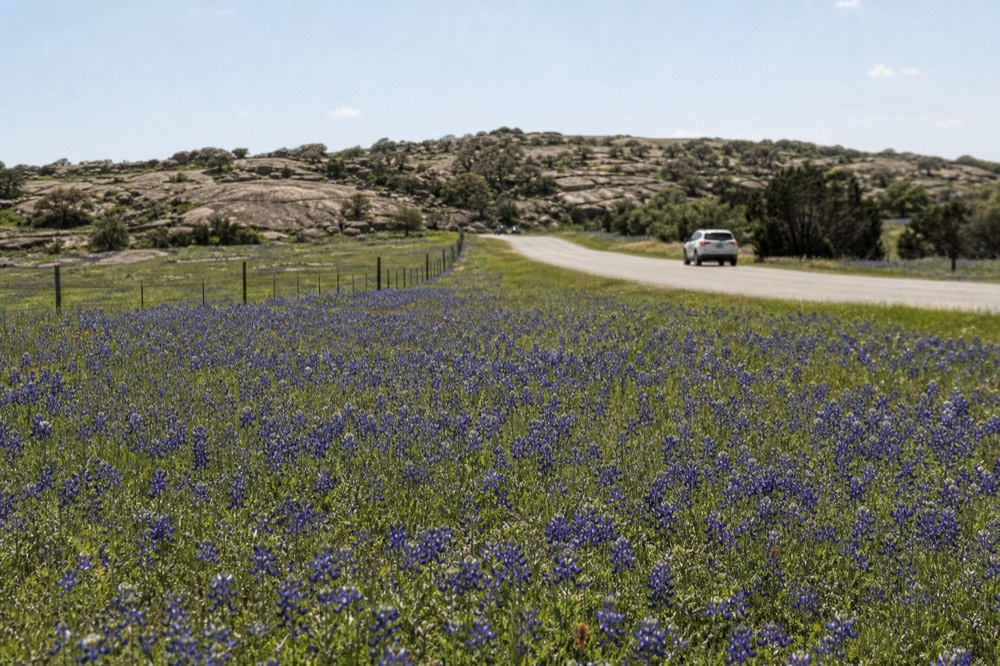
Enchanted Rock is a pink granite dome about 18 miles from Fredericksburg with an $8 day-use fee for anyone 13 and up and free entry for children 12 and under. Wildseed Farms, the nation's largest working wildflower farm, sits 7 miles east and costs nothing. Willow City Loop is a free public road through bluebonnet country.
Enchanted Rock has one rule that decides your whole day. Day passes are required on weekends, holidays and school breaks, they release only up to 30 days in advance through the Texas State Parks reservation system or by phone at (512) 389-8900, and peak dates sell out. Turning up hopeful on a sold-out Saturday does not work. Fee and reservation details sit with Texas Parks and Wildlife.
The climb is not technical. It is bare granite with no shade, and July and August highs run in the low 90s, so summer means an early start or nothing. Cooler months are considerably more pleasant and the reservation pressure eases midweek.
Wildseed Farms is the easiest yes on this list. Free, more than 200 acres in production at the Hill Country site with over 1,000 cultivated acres across Texas, and close enough that it works as a 45-minute stop on the way in or out.
Willow City Loop deserves its warning. The bluebonnets peak from late March to mid-April inside a wider March-to-May wildflower season, and the loop is a public road through private ranch land. The official guidance is blunt: stay on the road, do not walk into the meadows, do not damage the flowers.
What does a full day cost with no tasting fees at all?
A no-wine day in Fredericksburg runs from nothing to about $34 a person in admissions. Main Street, the Memorial Courtyard, Wildseed Farms and Luckenbach are free. Enchanted Rock is $8, Trade Days parking is $5 per vehicle, and the museum at $26 is the only significant ticket.
Set that against the wine version and the gap is stark. Named Fredericksburg properties currently list $30 for a tasting at Barons Creek and $30 for Grape Creek's Classic Tasting, with a Taste and Tour at $45. Three unpaid stops on a transport-only tour therefore lands around $90 or more per person before the ticket. The full arithmetic sits in what a day on the wine road costs.
| Day plan | Admission cost per person | Notes |
|---|---|---|
| Main Street, courtyard, Wildseed Farms, Luckenbach | $0 | Food and drink extra |
| Add the Pacific War Museum | $26 | Free for children 9 and under |
| Add Enchanted Rock | $8 | Reservation needed on weekends |
| Everything above on a Trade Days weekend | $34 plus $5 parking | Third-Saturday weekends only |
| A three-stop tour with tastings paid at each bar | About $90 in fees plus the ticket | Fees not included in the headline price |
None of that is an argument against wine. It just means a mixed group can build a day where one half spends $150 and the other spends $8, without anyone feeling subsidised.
When does the non-wine calendar actually peak?
Late March to mid-April for bluebonnets, mid-May to mid-August for peaches with the peak from mid-June to late July, third-Saturday weekends year round for Trade Days, and late November into early January for the German Christmas programming on Marktplatz.
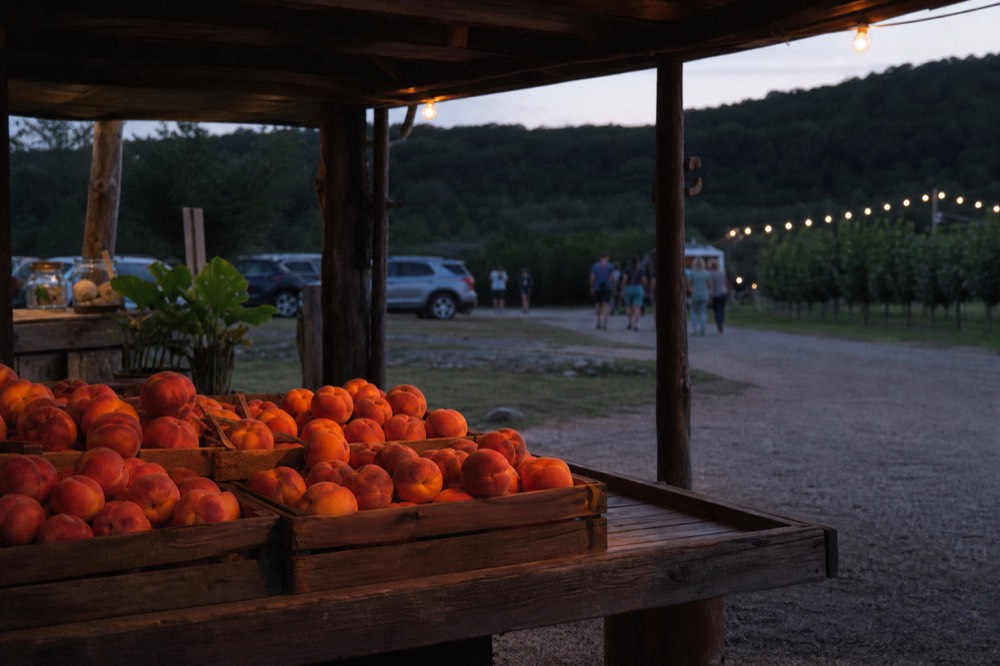
Peach season is the strongest reason to move a trip if wine is not your driver. The Gillespie County window runs mid-May through mid-August, peaking mid-June to late July, and the orchards and roadside stands operate right through it.
Christmas is the other one. The Weihnachten programming centres on Marktplatz, with a 26-foot German Christmas pyramid lit nightly with moving figures, the Eisbahn ice rink and Christmas Nights of Lights, generally running late November into early January. Exact 2026 dates were not yet published when this was written, so confirm before building a trip around one evening.
Summer is the honest weak spot. July and August highs sit in the low 90s, which turns the granite dome into a morning-only proposition. The long-run normals put the annual high at 77F and the annual low at 53F, so the shoulders are where the walking weather lives.
If your dates are fixed and you want the full picture of how the wine and non-wine layers overlap, the full things-to-do guide maps both, and how one day actually shakes out works a single day hour by hour.
How do you build a day where nobody feels dragged along?
Split the day rather than the group. Put the free, fast attractions in the morning when everyone has energy, run the wine block in the middle when the drinkers are fresh, and keep the evening on walkable Main Street so the non-drinkers are not stuck as chauffeurs at 9 p.m.
The practical version looks like this. Wildseed Farms or the Memorial Courtyard between nine and ten, both free. The tour or the museum from around eleven to four, depending on which half of the group you are. Dinner downtown, on foot, where the car does not matter. That order works because the two halves have opposite energy curves: the drinkers peak in the middle of the day and fade after the third pour, while the non-drinkers are fine all day and get bored during exactly that middle stretch.
If your party is large enough that splitting means two vehicles, a private hire is often the cheaper answer than it looks. A private Sprinter at $475 across eleven people works out at about $43 a head, which is less than a per-person seat on most shared tours. Those options are grouped under private wine tours with a driver, and the formats that pair tastings with something else sit under wine days built around another activity.
One last thing worth saying plainly, because plenty of pages here will not. If nobody in your group drinks at all, you do not need a wine tour. You need two mornings, a museum ticket, an $8 park pass booked 30 days out, and a table at a German restaurant. That is a good trip, and it costs less than one afternoon on the corridor.